Leadership App
Using Design Thinking to generate new innovative ideas
The Learning and Talent Design teams always received feedback from our new leaders that it was difficult to find all the information they needed as part of onboarding and that they would later reference in their role. The team wanted to utilize a Design Thinking approach to ensure we created a product that would best meet the needs of our intended audience. Then, the design team used the outputs as part of a design sprint to quickly create and iterate a prototype that could be reviewed by our leadership and target audience.
Design Thinking Workshop
Leadership and Facilitation
This would be my first time leading a design thinking workshop. My partner regularly leads these workshops as part of his work and was will to support me. In order to prepare, I completed and reviewed the AJ & Smart design thinking facilitator workshop course. This gave me the fundamental background, skills, and activities I would need in order to run a successful workshop. My partner was also kind enough to share some of the blank assets his team uses during their workshops with clients. I knew these activities would be simple for the team to understand and would get the results we needed.
I created the leader personas we would use in the workshop ahead of time. Typically these come about through an interview process, where I would talk to our end users, their leadership, and anyone else involved in their development in order to understand the “architype” users. Our tight schedule didn’t allow time for this interview process, so I used my background working with leaders and connected with my team to ensure the personas we created were representative of the population.
Knowing I would only have a day and a half with my team I set up all of the whiteboard activities in Canva beforehand to ensure facilitation ran smoothly. I invited a diverse variety of associates to represent our border team, making sure each group was represented.
Before the two day workshop, I shared a sample board with participants so they could practice using the tools so we could jump right into brainstorming. The whiteboard included tips and functionality instructions from Canva and practical exercises for participants that they would use in the workshop, such as commenting with sticky notes and using dots to “vote”. Nearly all of the participants took time before the workshop to complete these activities, making the workshop run much smoother.
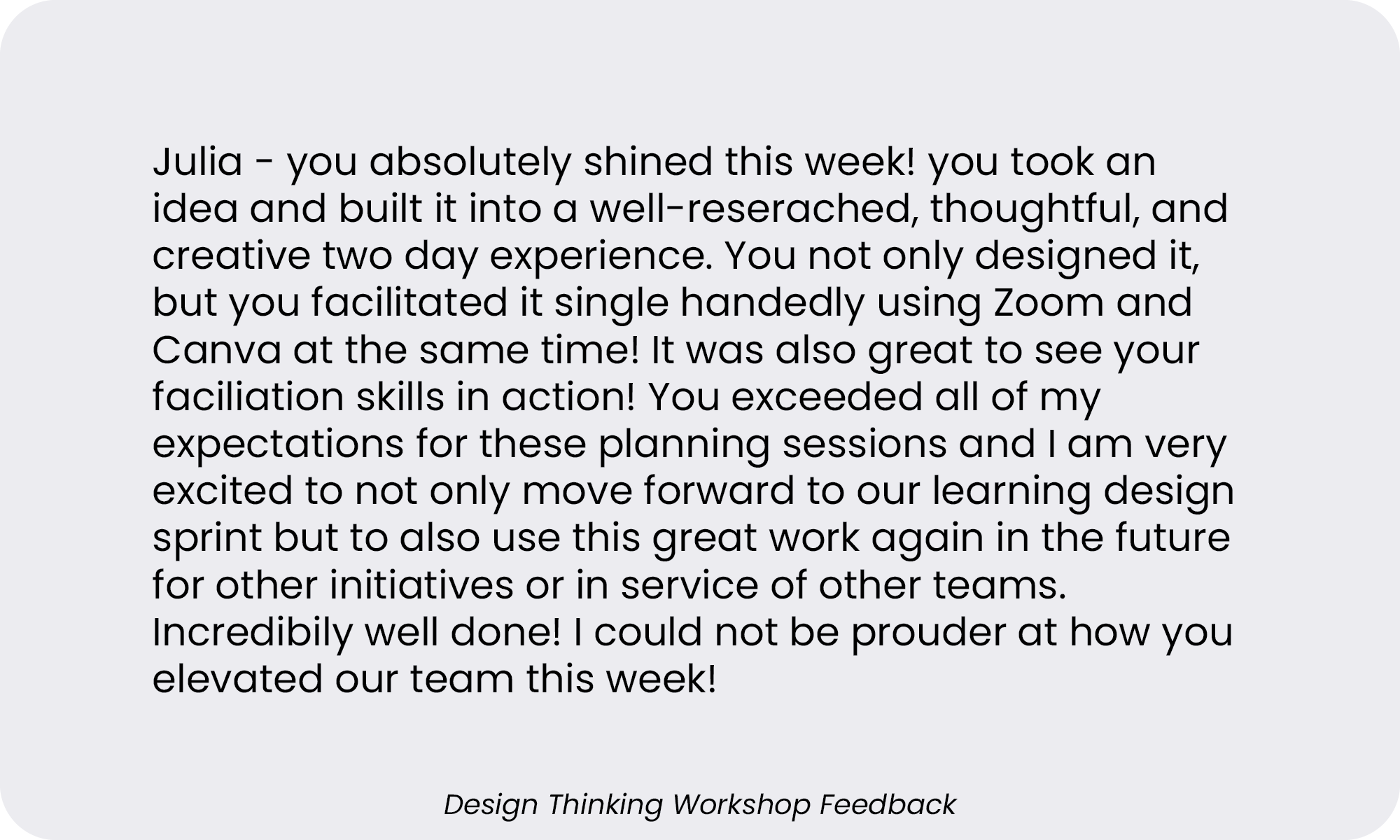
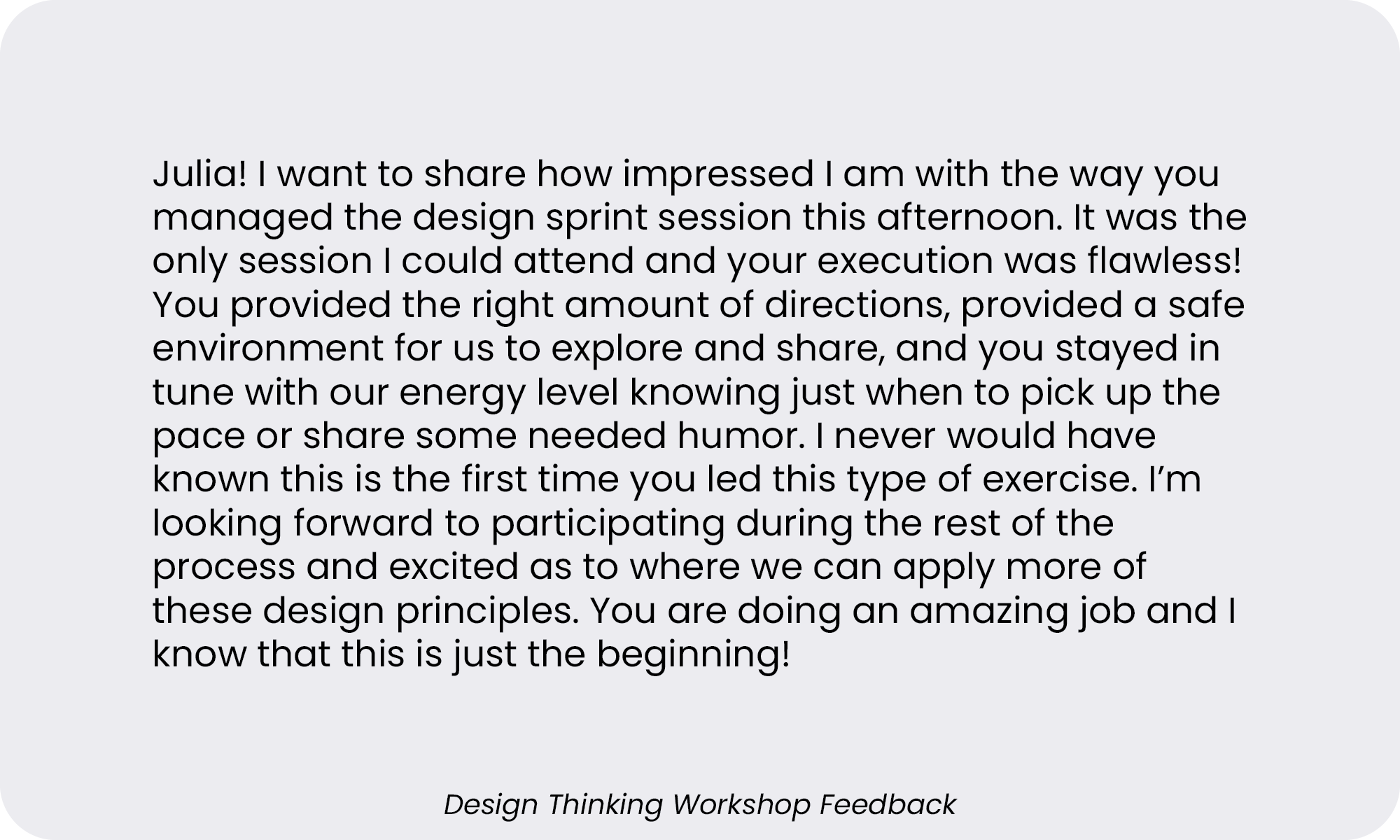
Facilitation isn’t a core responsibility of role, however I made sure to prepare so that everyone could have the best and most productive experience. During the workshops I explained each of the activities, made sure everyone got a chance to participate and contribute and helped guide the team towards a final product, avoiding getting off track. My philosophy was to run the workshop as I would want it run as a participant: having it be worth my time and effort while still being enjoyable.
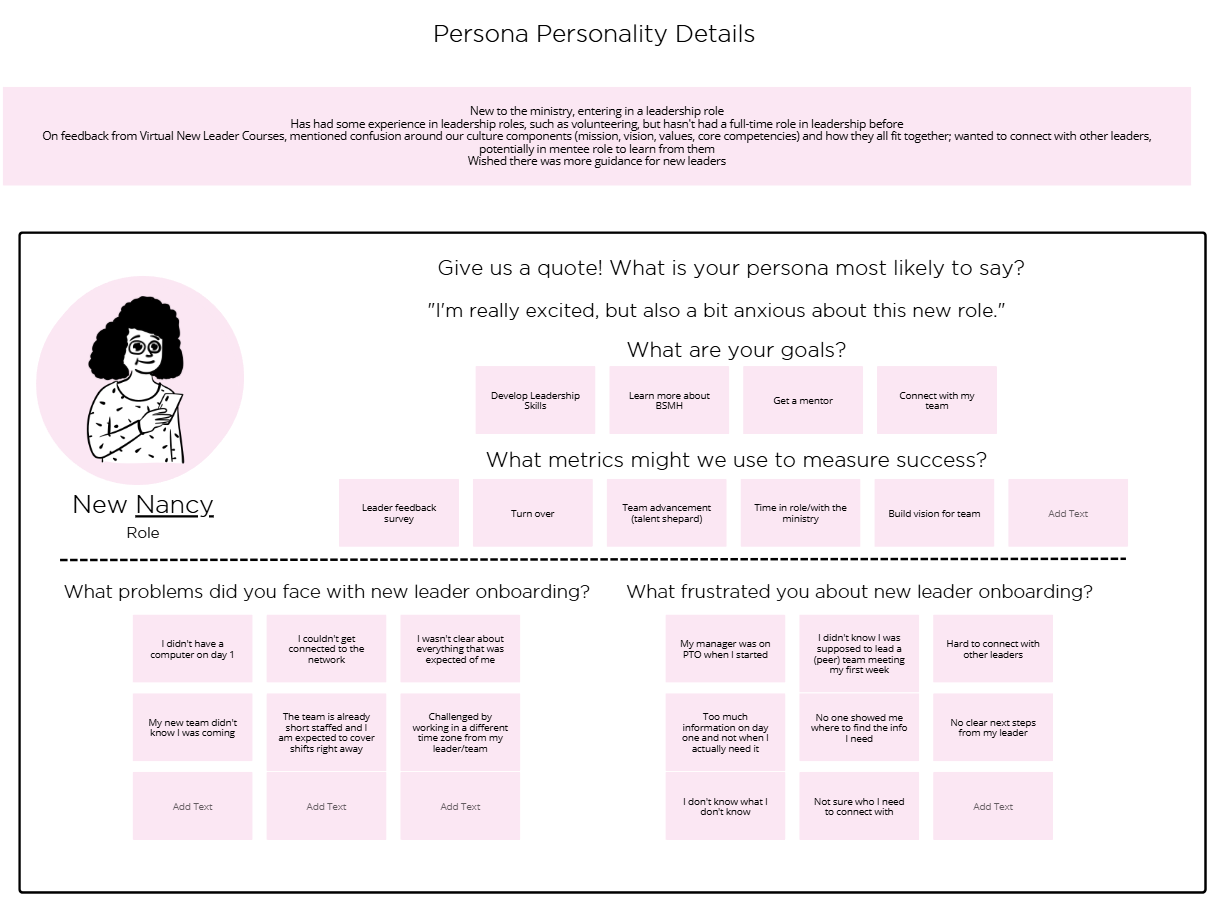
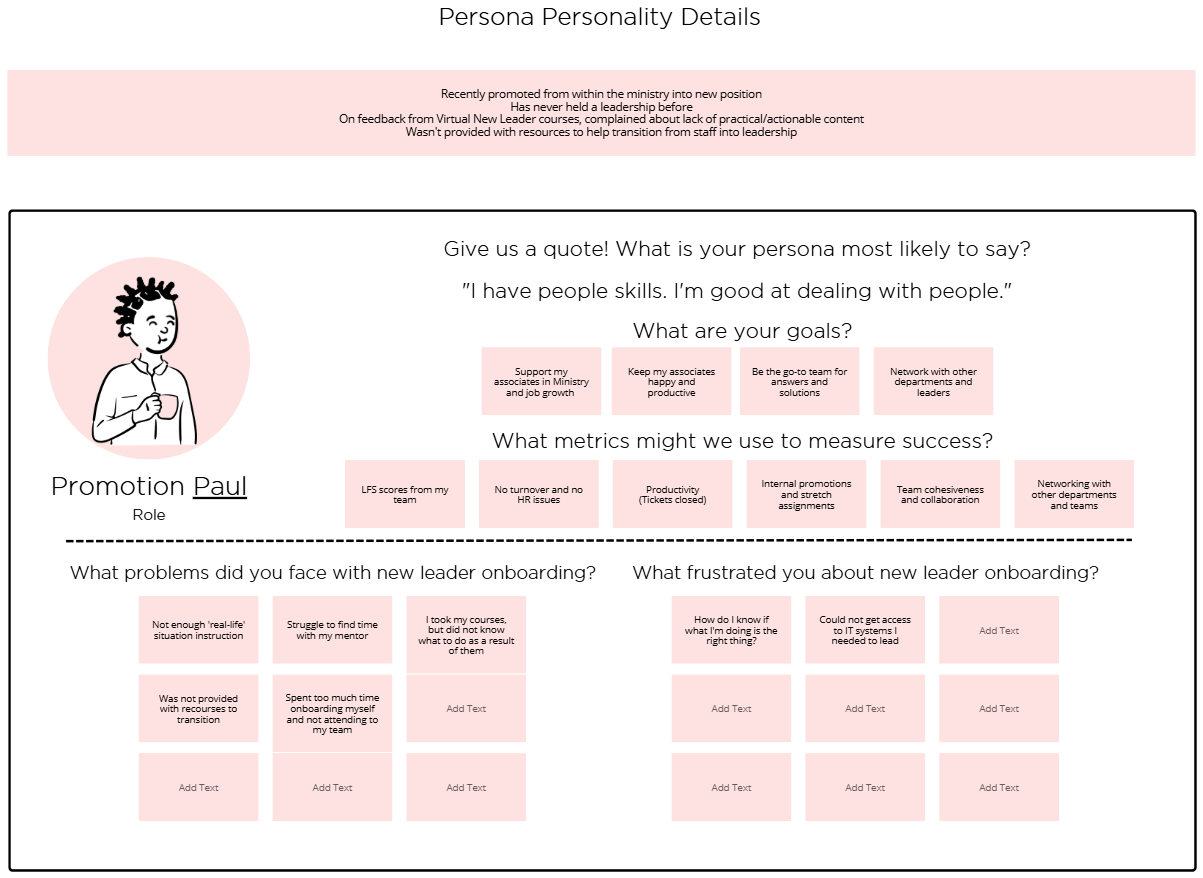
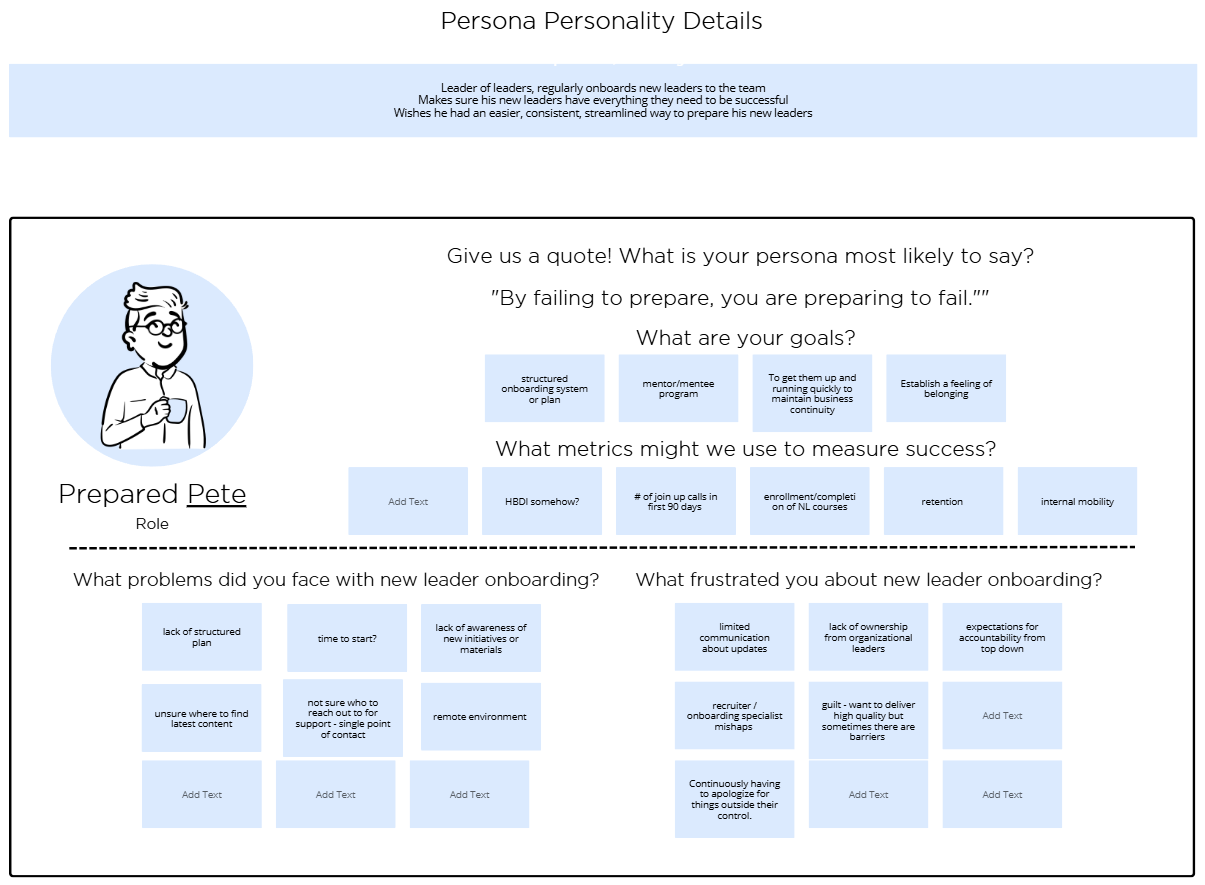
Examples of the personas that were created ahead of time. The pre-work included the persona name, general description, and persona image. During the workshop, I divided the group into pairs that were assigned to a specific persona. The pairs used the time to fill out the sections in the box, adding more detail to the new leader persona. Each persona was color coded so it was easy to refer back to the persona as the answers from this exercise were used throughout rest of the workshop.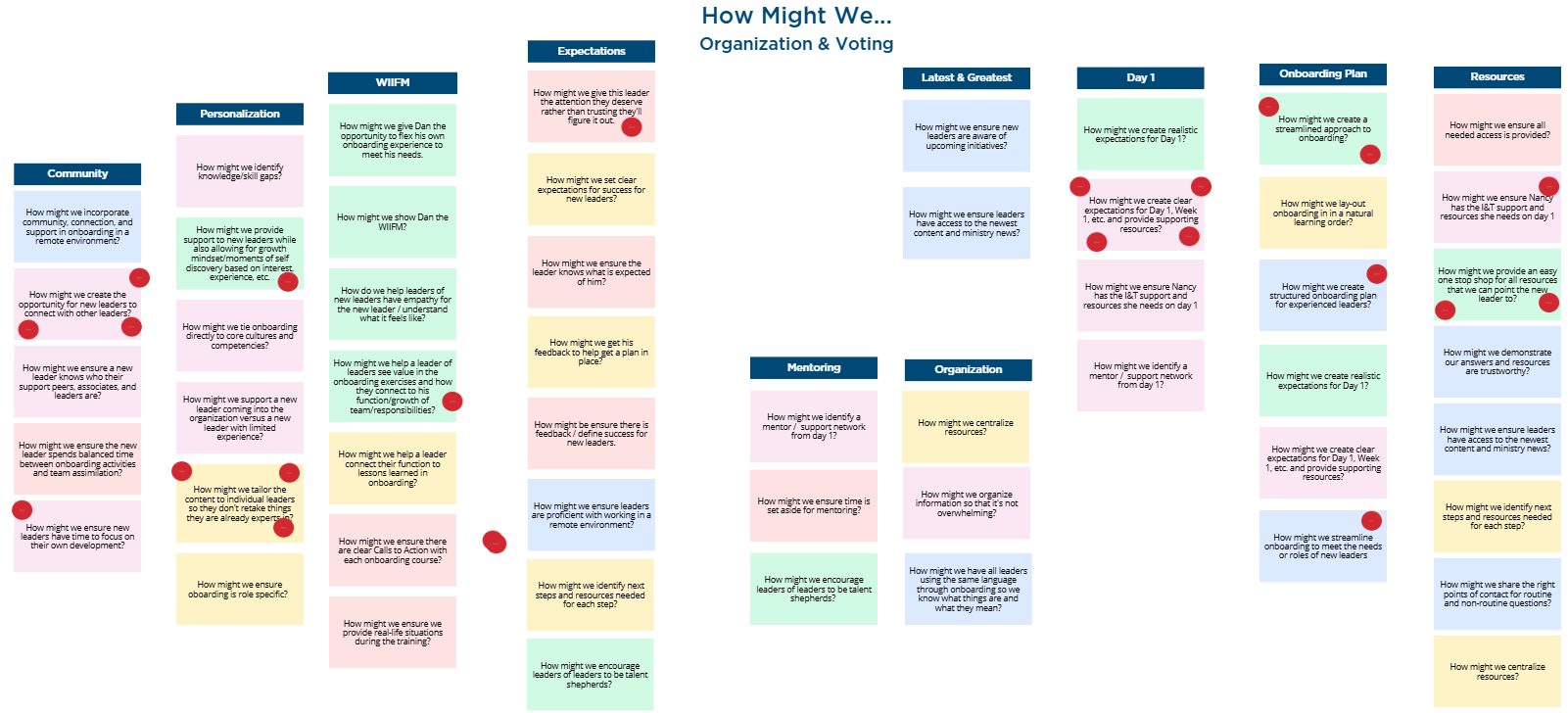
For this exercise participants created "how might we" questions to help solve the problems and frustrations of each persona. We then grouped these questions based on themes. Once we had the thematic groupings, participants were asked to vote with red dots on the questions that were most important to answer. For some exercises, participants could vote as many times as they wanted with red dots. For other exercises they were only allowed one vote. The primary stakeholder's vote always weighed more than everyone else's.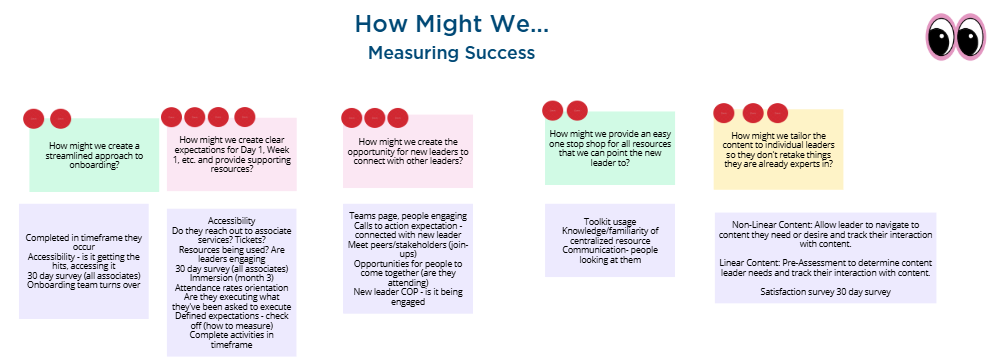
We wanted to make sure we incorporated data analytics as a part of the final learning solution. Throughout the workshop, I included specific data measurement exercises that made us think through those components that would be in the end product.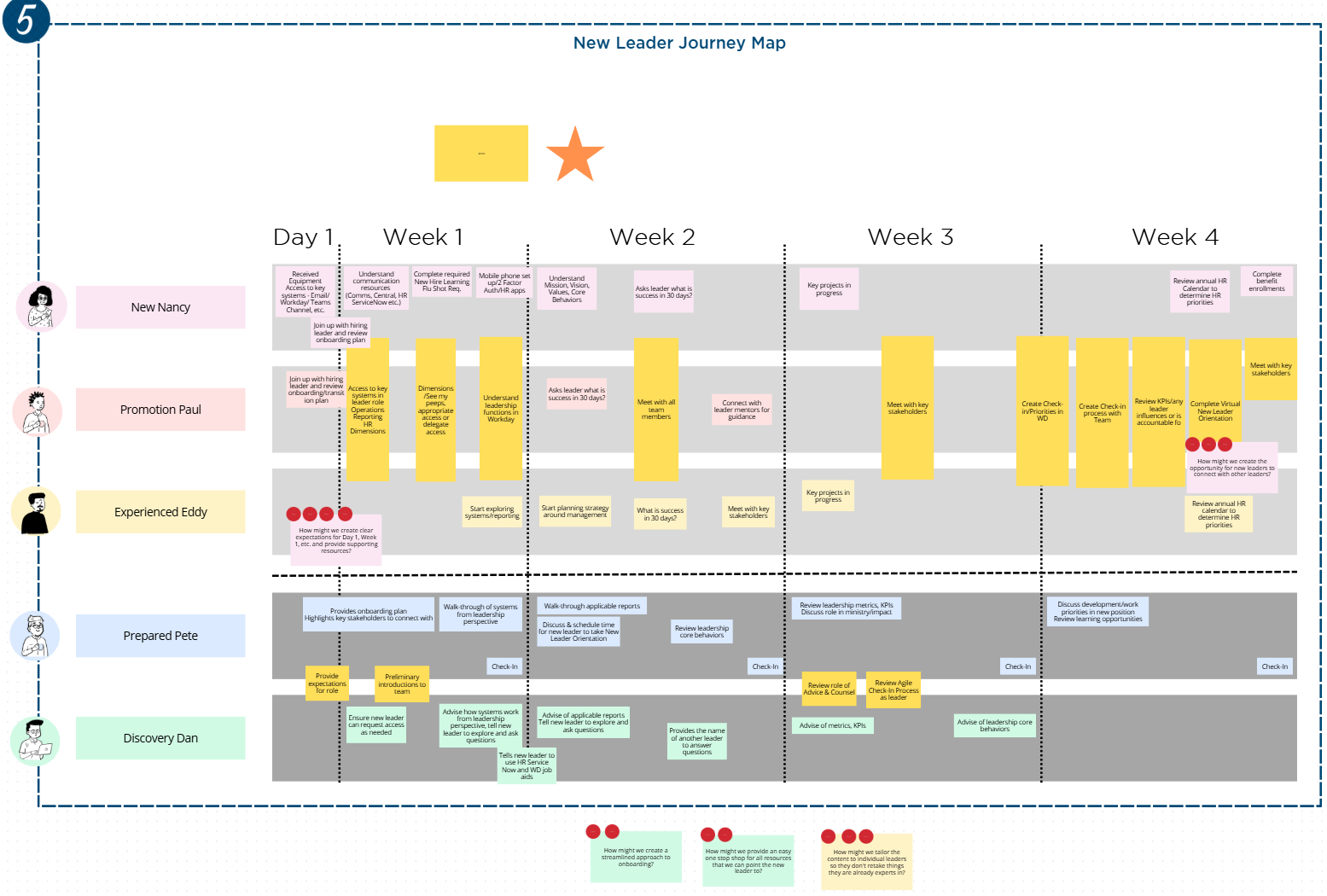
It was important to map out the journey of each of the personas, 3 new leaders and 2 leader of leaders. This variety was important as we wanted the final learning product to be useful to new leaders and their leadership, making the onboarding process easier for everyone.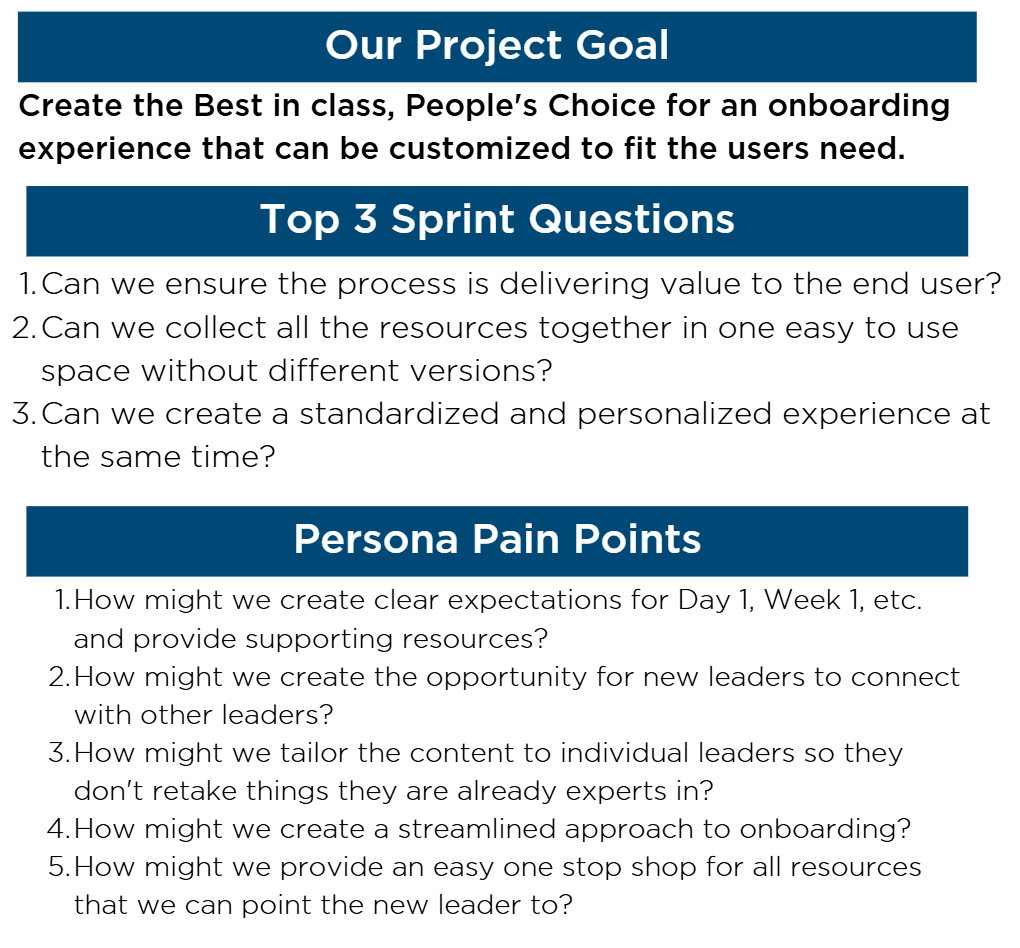
These key concepts were created during the design thinking workshop. I referred the team to them regularly throughout the process to ensure that what we were creating met the project goal, answered the sprint questions, and addressed the persona pain points as best as we could with the time and resources available.By allowing the team to create these concepts, they had ownership and influence in the design of the final product, rather than I (as the design lead) or the primary stakeholder creating them. The diverse team members included in the workshop were able to bring their experience with new leaders to this project, creating a focus that was truly representative.
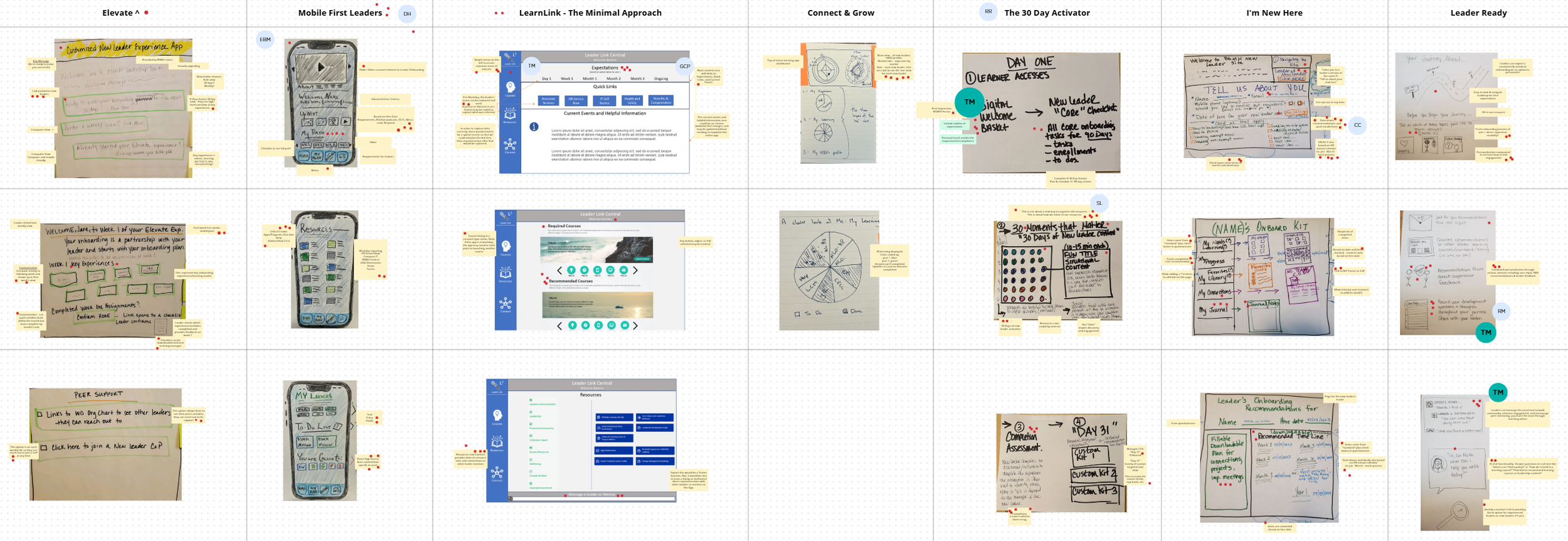
Design ideas that were created by various members of the workshop team. After they were presented, team members voted on the components that would be most valuable to our personas. 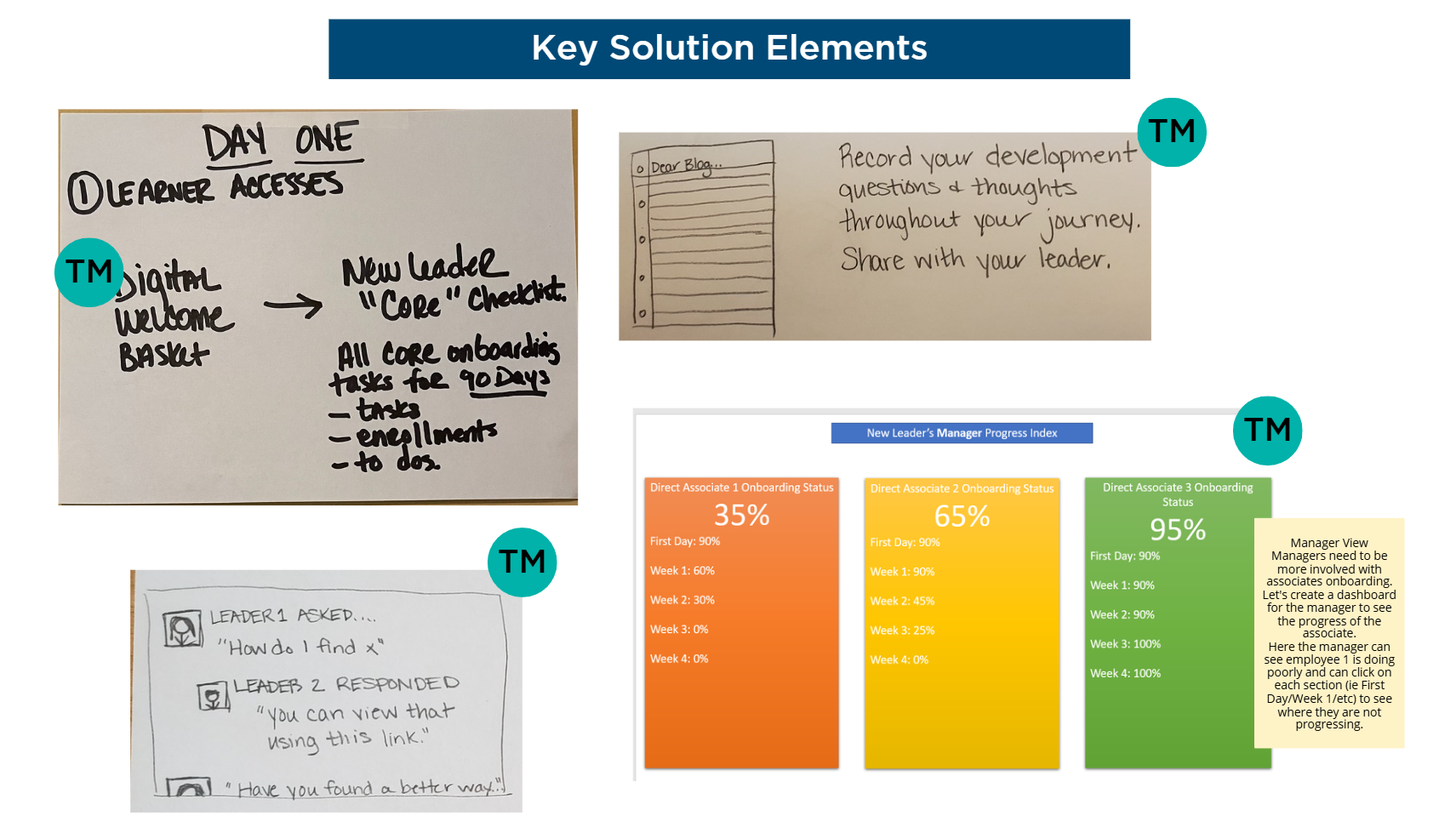
The primary stakeholder selected the top 4 design idea concepts that they would like to see incorporated into the final product.This primary stakeholder found it challenging to have their vote count for more. They would regularly want to see how everyone else voted and choose the most popular option. I would gently remind them that their selection should be based on the project goals, sprint questions, and persona pain points, which may not necessarily be reflected in the most popular option among the group.
Team Design Sprint and Collaboration
After the Design Thinking Workshop, my team took the key solution elements and worked together to create a prototype of the New Leader App.
I served as the project manager. I took the Key Solution Elements from the workshop and created a mock-up of how the new leader app could look. We came together to review the outcomes from the sprint, still remaining focused on the project goal, sprint questions, and persona pain points. I shared with the team the sprint schedule I had created, providing structure to the design sprint but with room for flexibility as needed.
While the design team was available to work on the project throughout the week, we pulled in other team members and gave them specific roles and tasks that met their area of expertise and allowed them to contribute to the project. These extra roles included:
Quality Assurance - another set of eyes to review the end product and test it to it’s limits to ensure the best user experience
Data Expert - help incorporate the tracking and metrics we outlined during the workshop
Engagement - create a pilot and communication plan for the final product
Voice of the Leader - while not front-line leaders themselves, these individuals worked regularly with new leaders and their leadership so they were able to share a new leader perspective on the product we were building
Our goal at the end of the week was to get something completed, even if it wasn’t perfect. Extras, like motivational videos, were excluded from the design. Instead, we focused on the key new leader learning journey and resources. This allowed us to create a product that was 70-80% complete that we were able to showcase to select new leaders and leadership to get feedback.
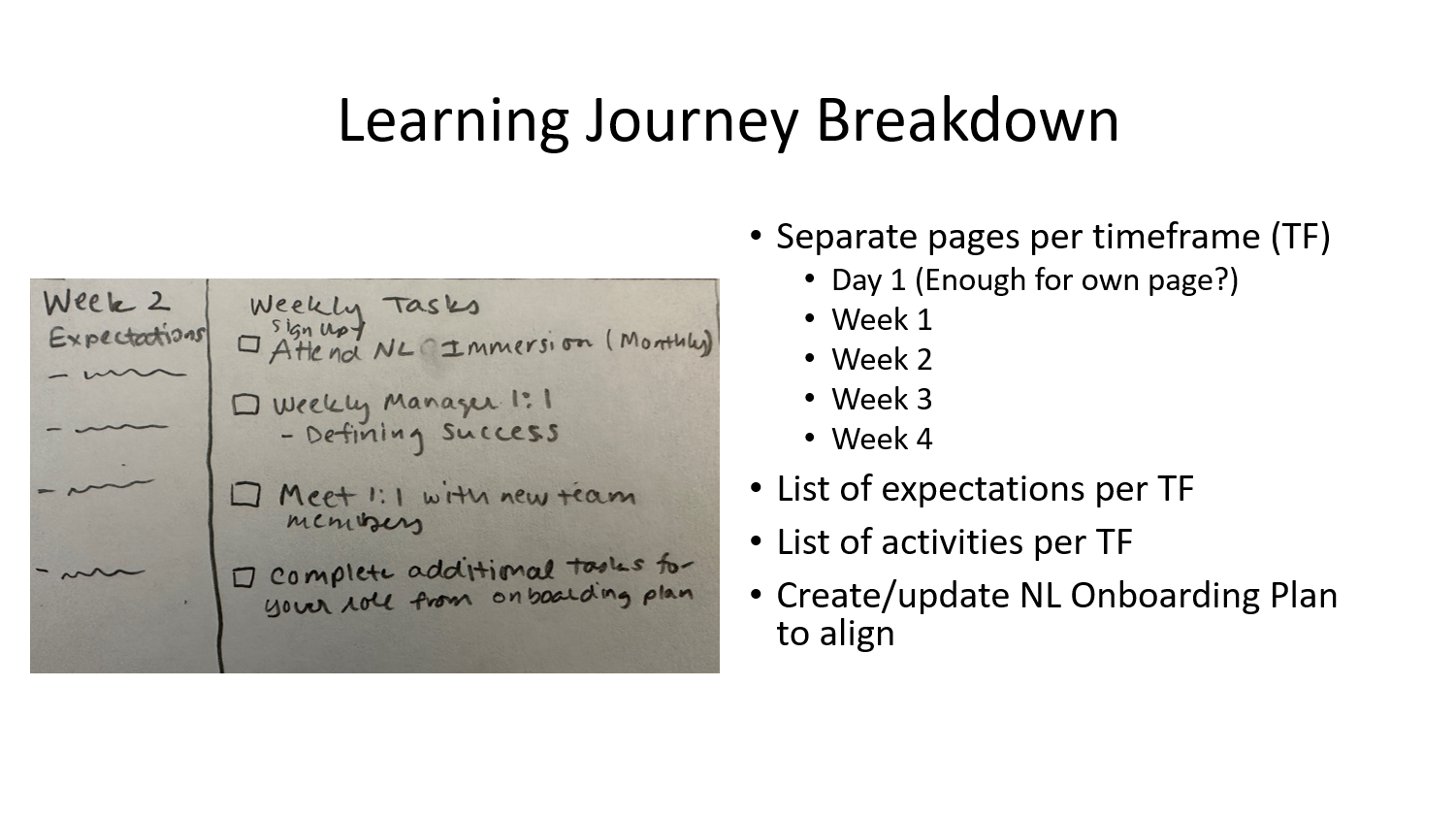
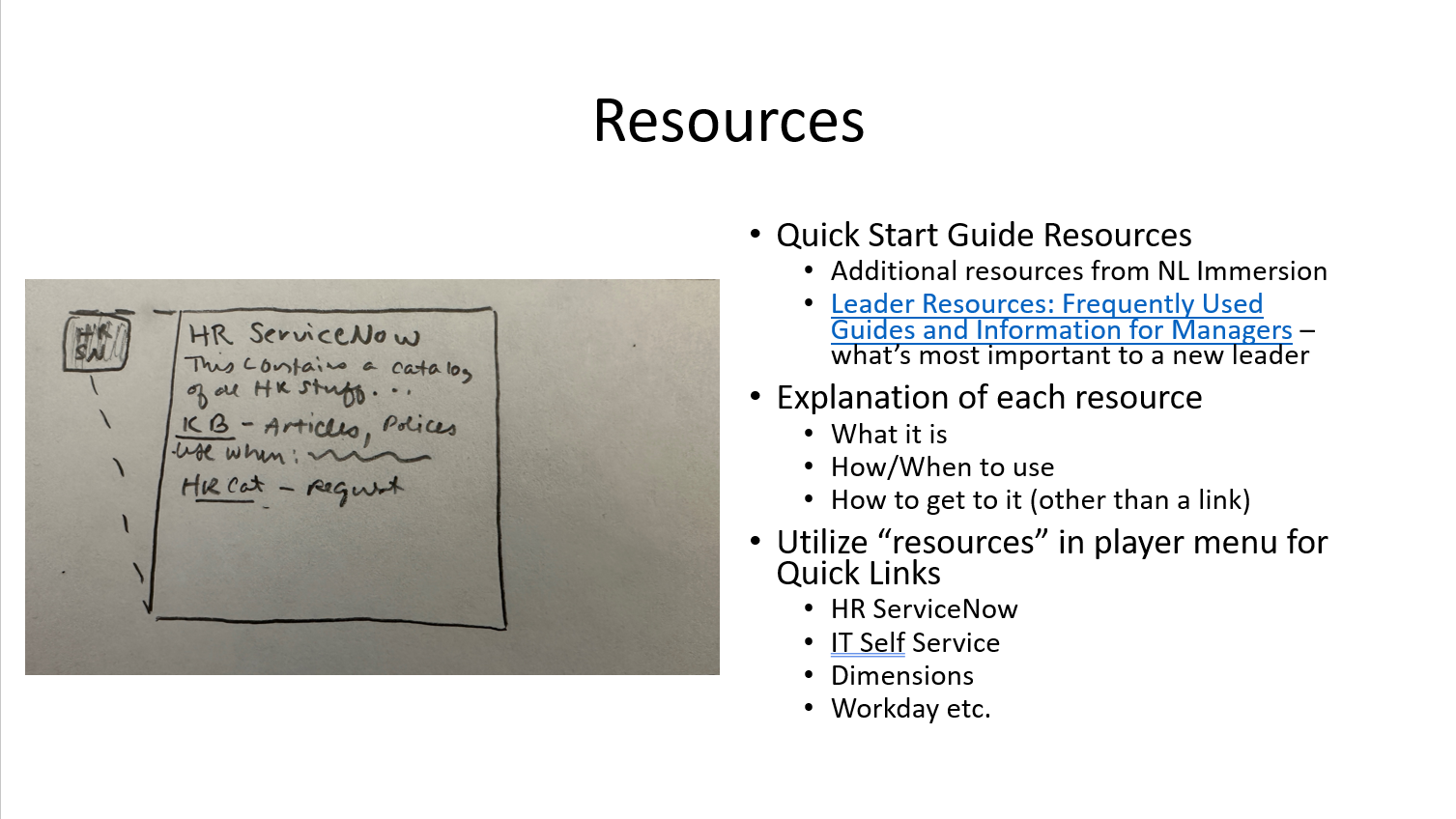
A mock-up of the key components: the learning journey and resources sections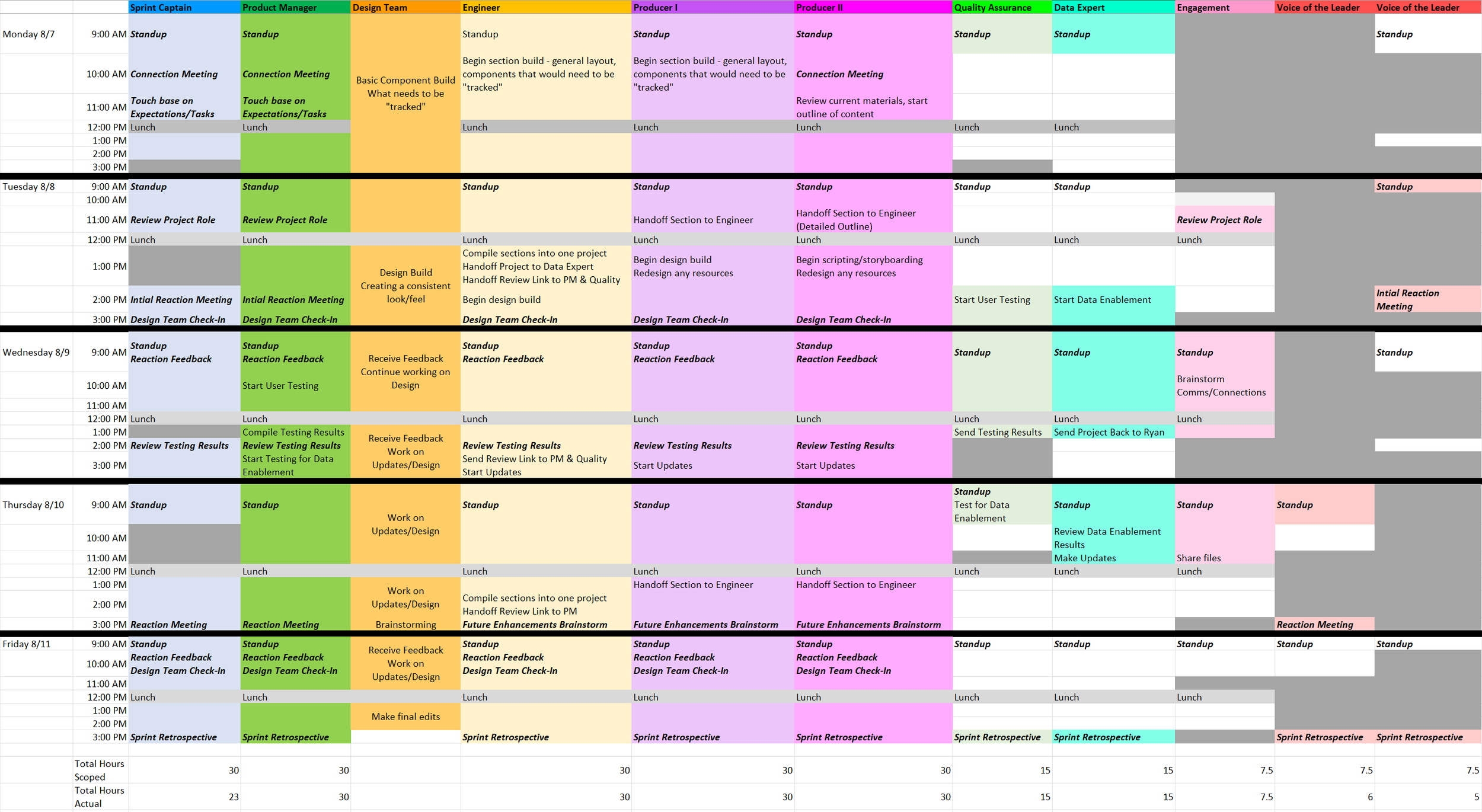
The sprint schedule for the week. The first six columns represent the design team’s work, with the third column outlining the team’s overall assignments for the day. The last five columns represent other members of the team helping with the project.
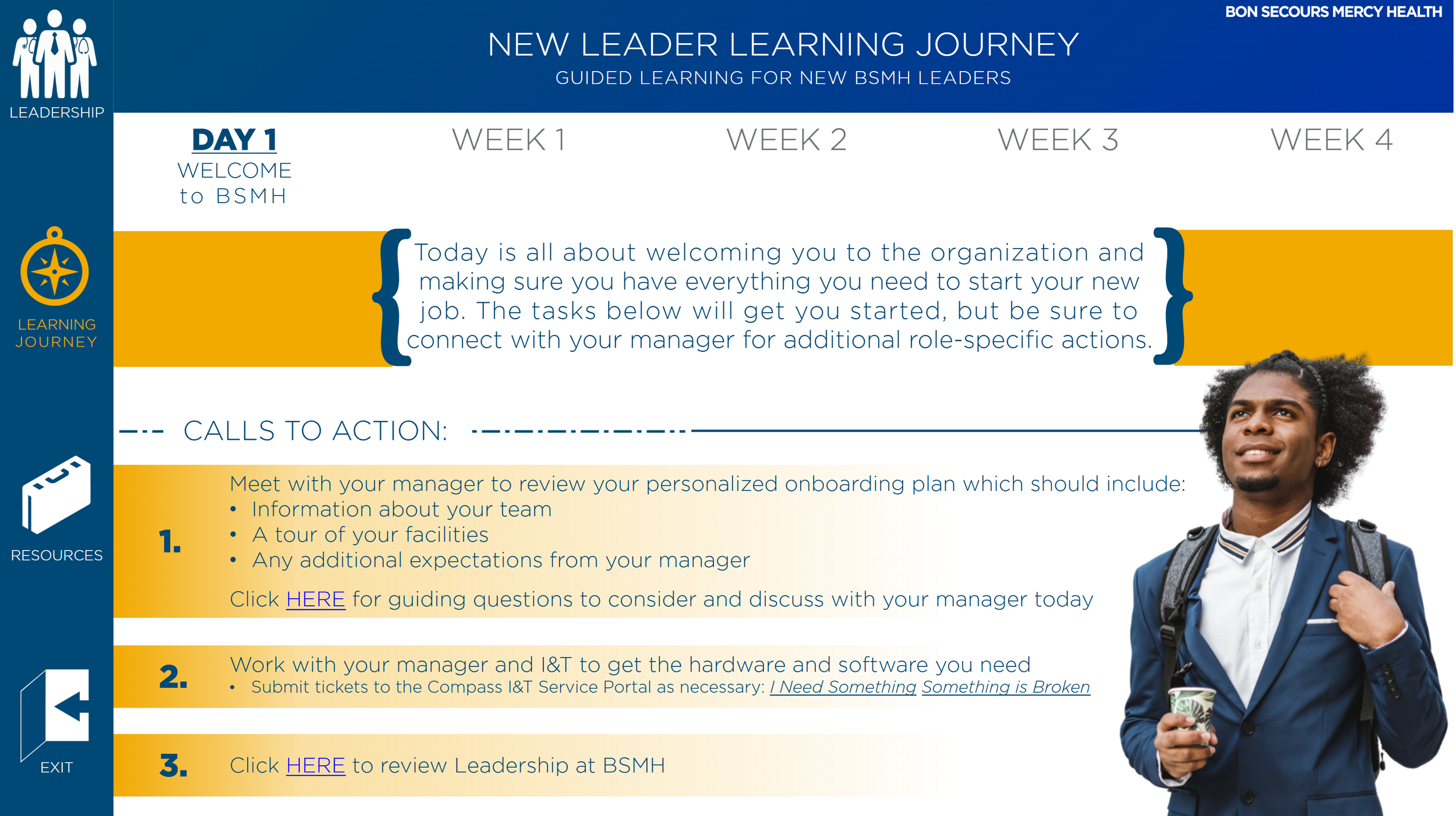
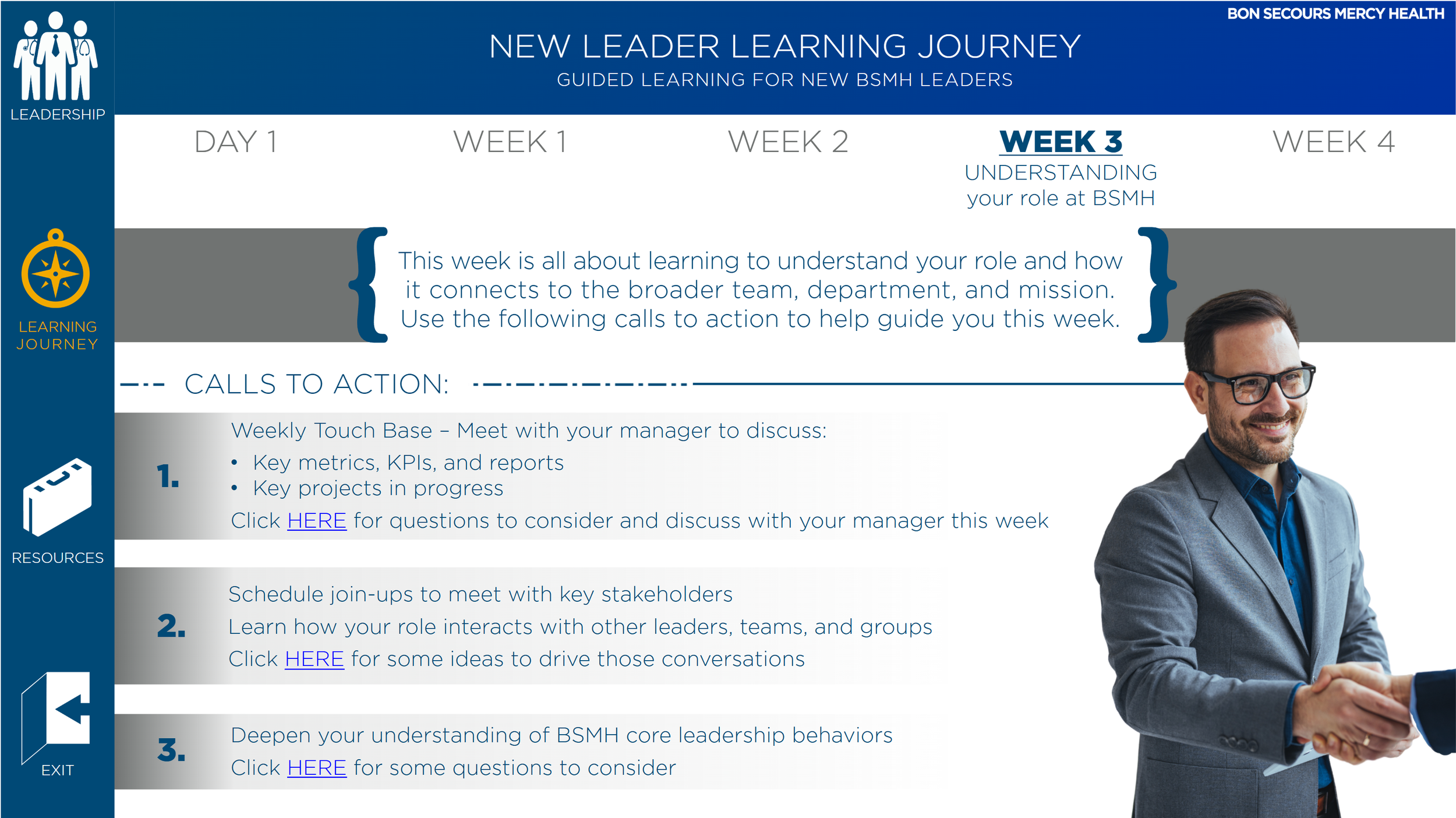
The New Leader Learning Journey in the prototype.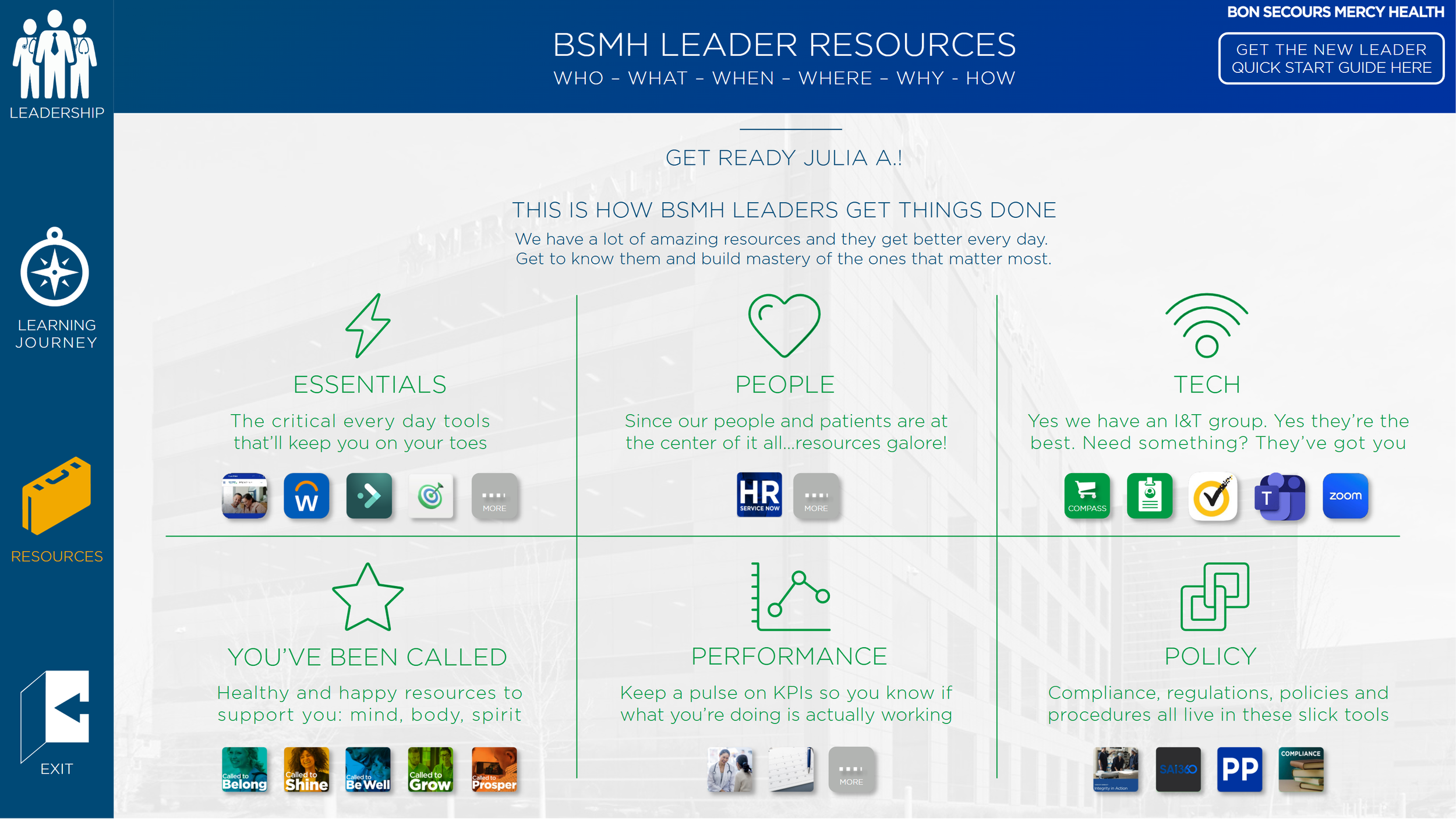
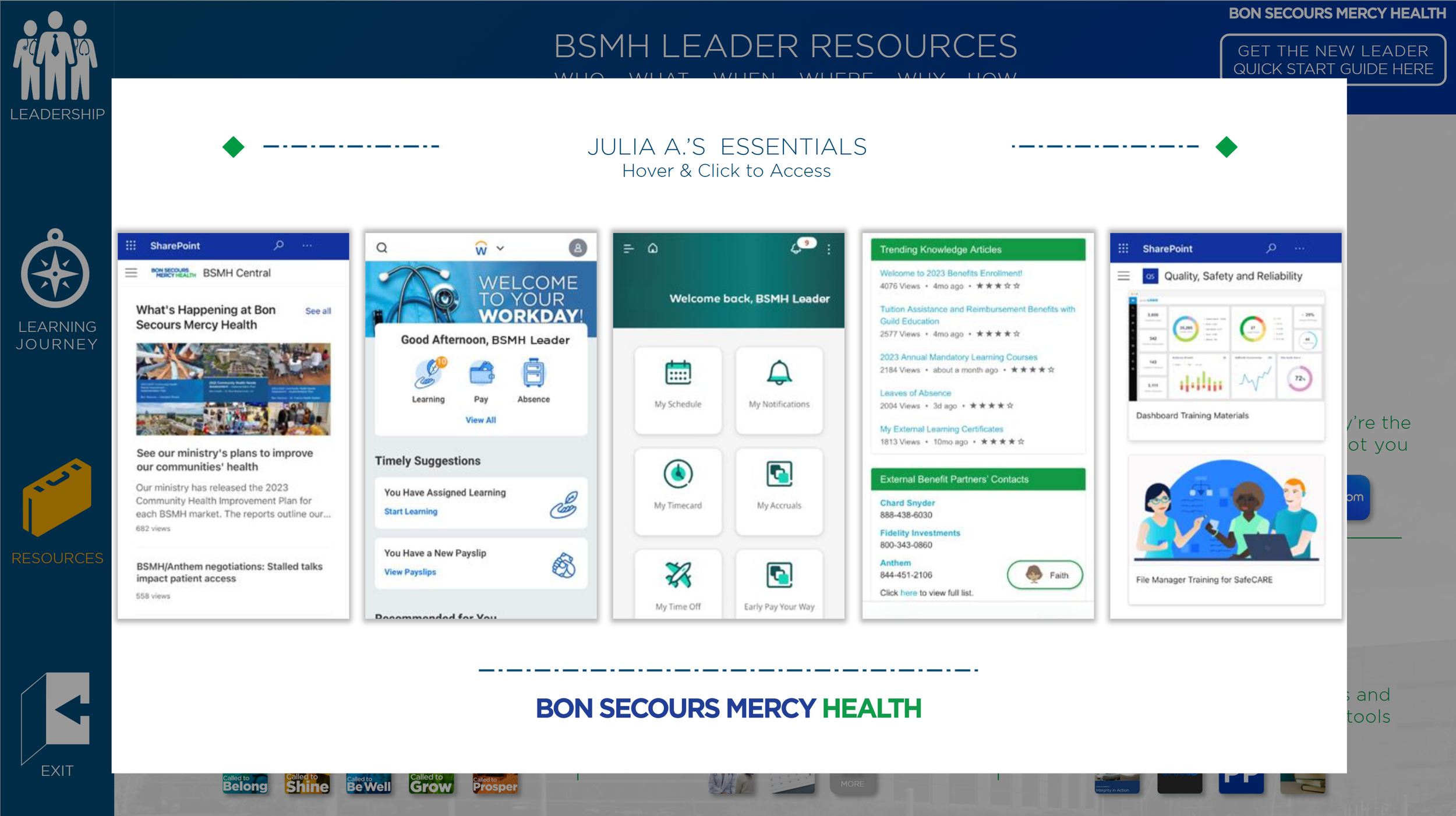
The Resources homepage and Essentials section in the prototype.Final Thoughts
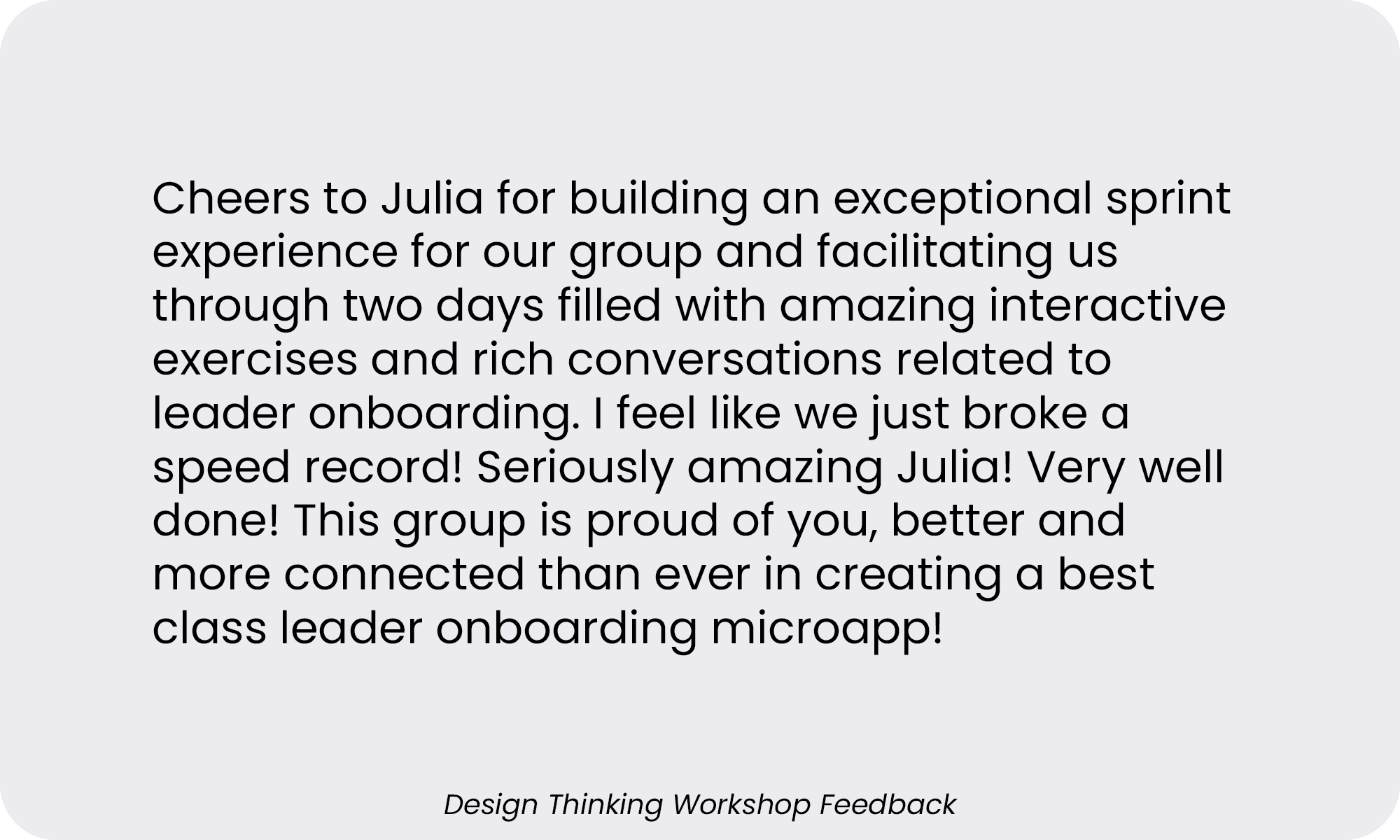
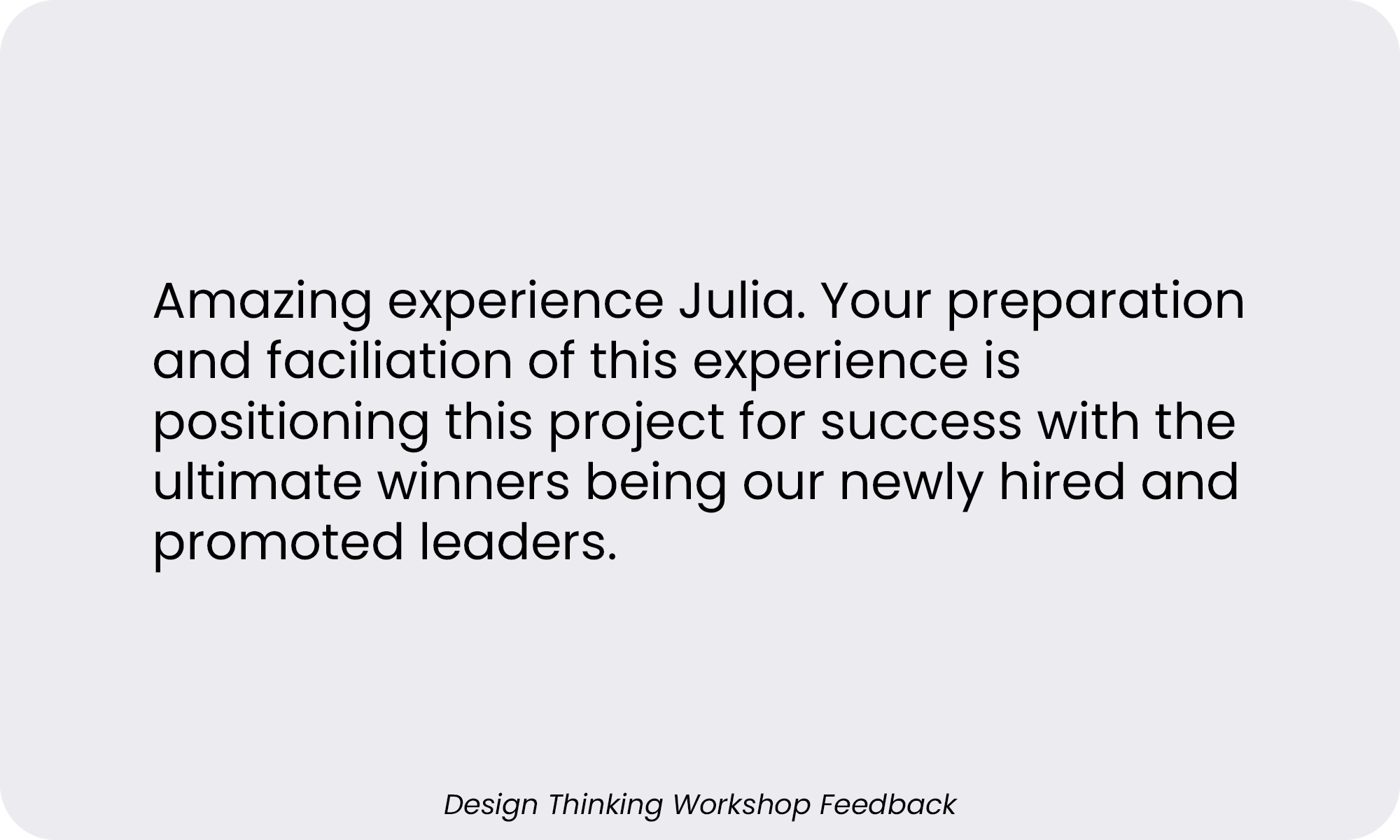
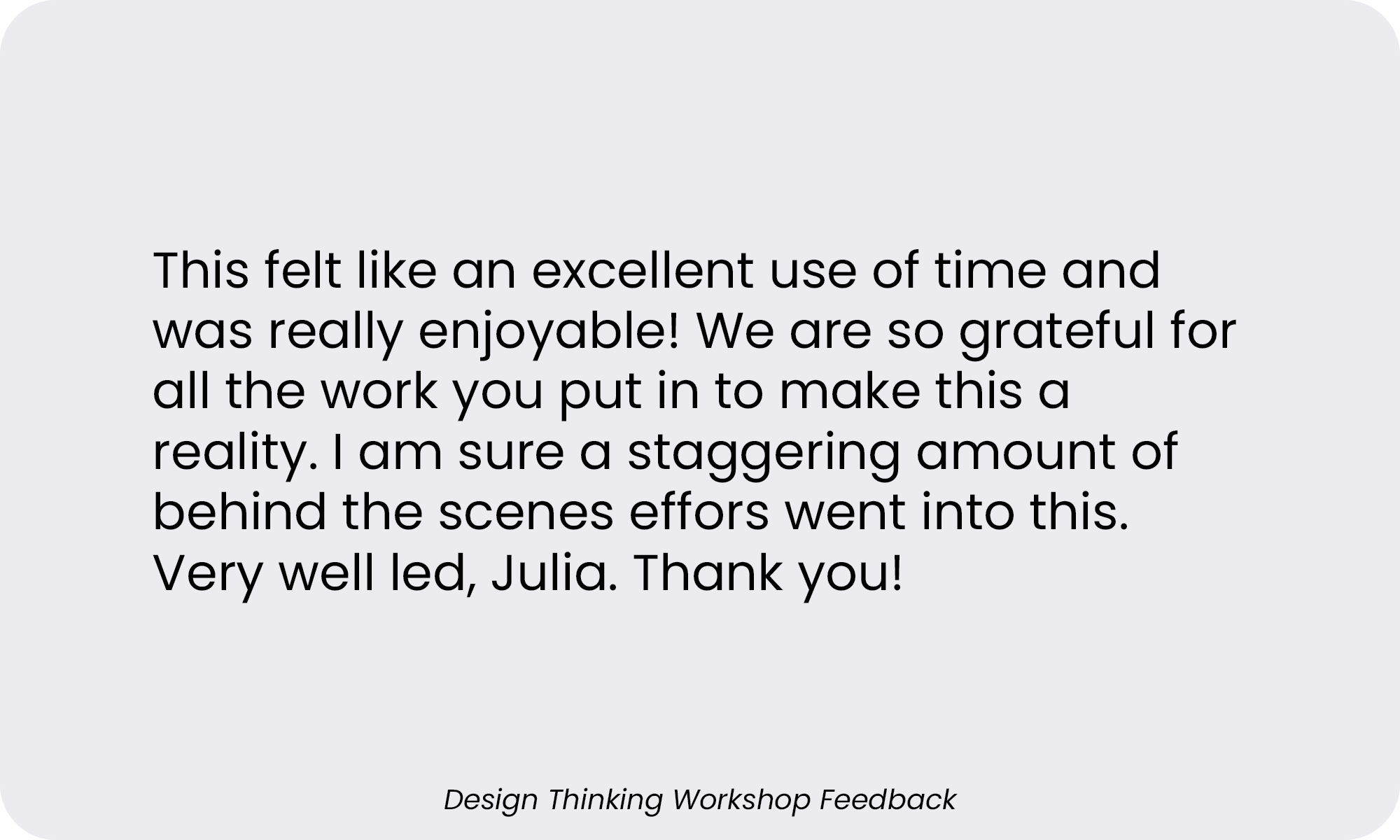
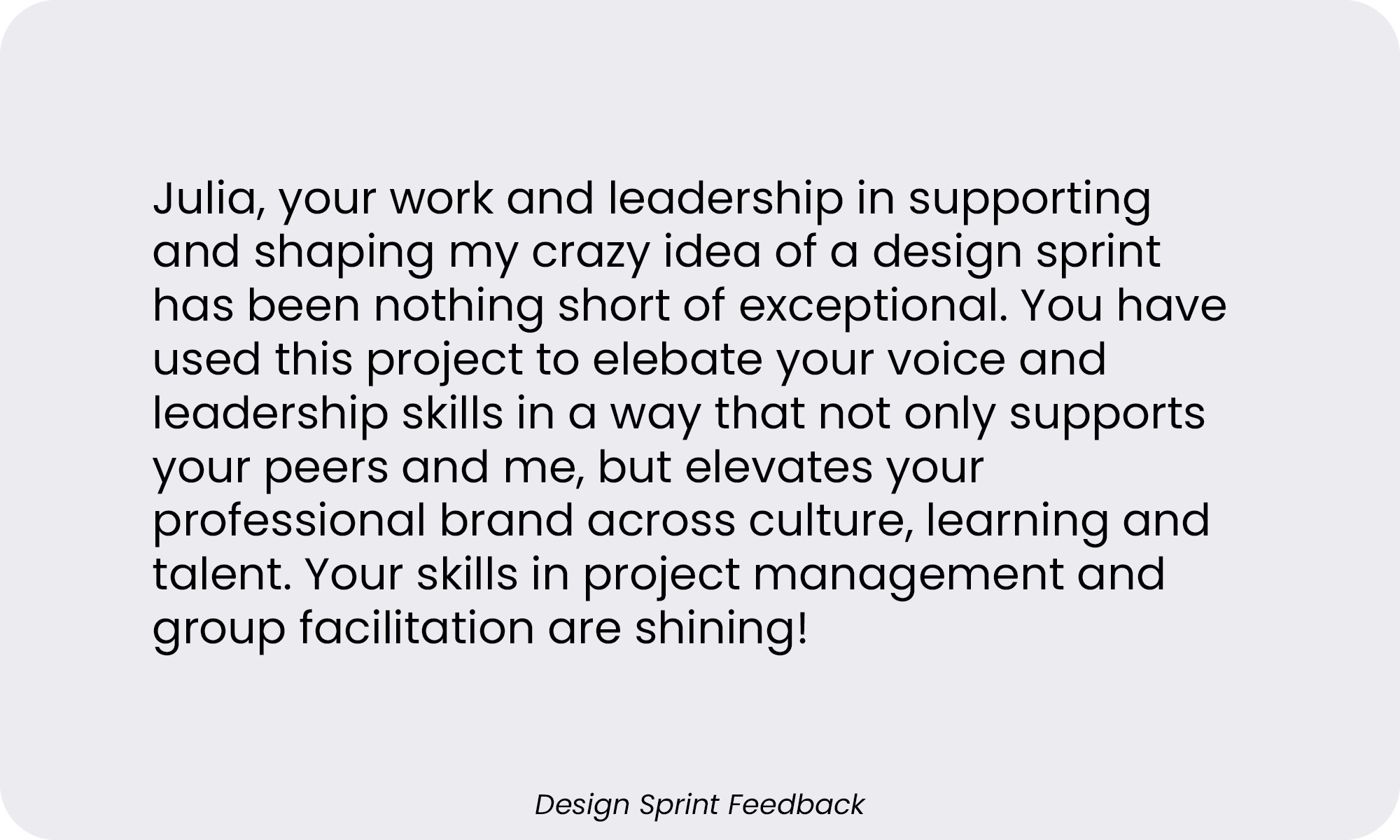
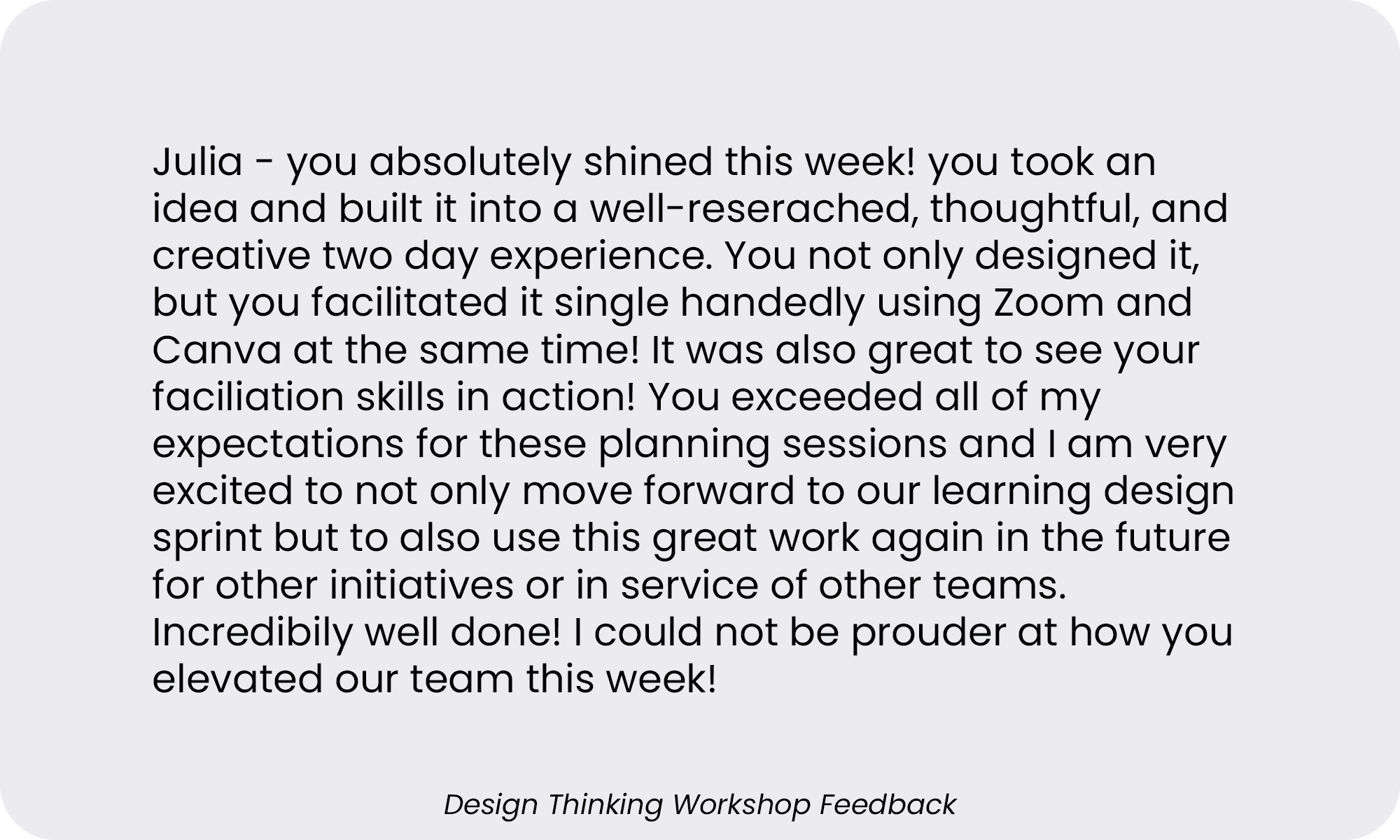
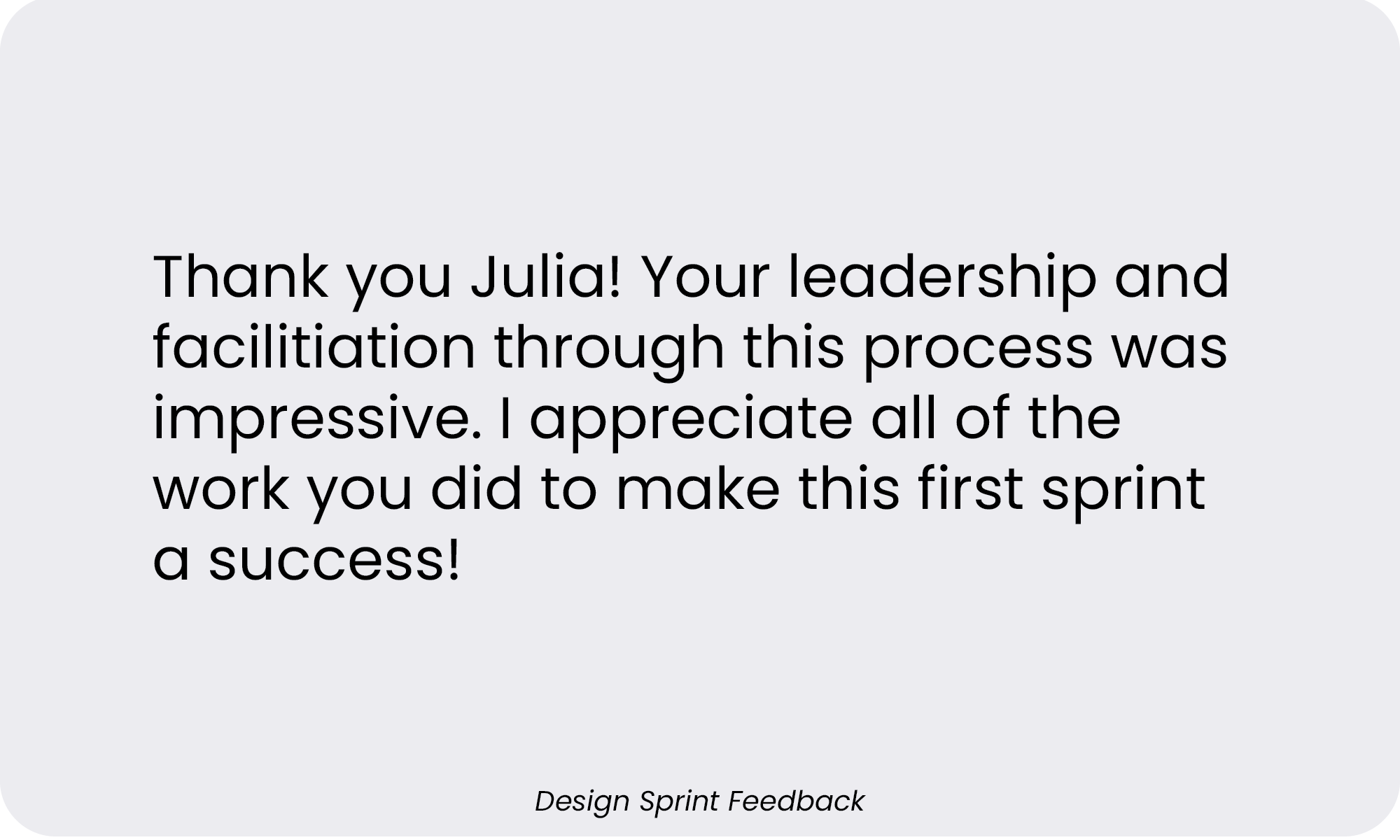
This project allowed the broader team a new experience collaborating together. We were able to quickly brainstorm new ideas, select the ones that were most important, and build a working prototype in a tight timeline. Everyone had positive feedback from the experience.